
2025/26 Annual Survey Results
Thank you to everyone who completed the North Yorkshire Safeguarding Adults Board surveys for 2025/2026. We heard from 81 members of the public and 140 professionals and volunteers, and your feedback will help shape our work over the coming year.
The public survey showed that 68% of people who responded knew how to report abuse and neglect, but only half had heard of the Board. People told us they would like clearer information, more local awareness activity and messages shared in familiar places such as community venues, libraries, resident publications, the NYSAB website and social media.
Financial abuse was the topic the public most wanted to learn more about, followed by organisational abuse and discriminatory abuse. Professionals and volunteers told us they would welcome more support on self-neglect, modern slavery and financial abuse.
The workforce survey showed strong levels of confidence, with 95% of respondents understanding their safeguarding responsibilities and 99% knowing how to report abuse and neglect. People also highlighted the importance of clear guidance, practical tools, training, specialist advice, good communication and feedback after referrals.
We will use this feedback to make safeguarding adults more visible and easier to understand, improve public information, develop awareness activity on the topics people asked about most. We will continue supporting professionals and volunteers through training, briefings and practical resources.
Thank you again to everyone who shared their views. Safeguarding adults is everyone’s business, and your feedback will help us keep improving how we support people to speak up.
Safeguarding Adult Reviews Published
Alice and Peter
NYSAB has published the Alice and Peter Safeguarding Adults Review report, alongside a 7-Minute Learning Brief and a recorded Spotlight Session to support shared learning across organisations.
Alice and Peter were an older couple living in North Yorkshire who sadly died in January 2023. The review identified that they had been living with hoarding and self-neglect, and considered how agencies worked with Alice, who was known to services, and Peter, who was identified as needing support after Alice’s death.
The review highlights important learning about recognising cumulative risk, sharing information effectively, using professional curiosity and balancing a person’s choice and control with safeguarding responsibilities.
Colleagues are encouraged to read the report and learning brief, watch the Spotlight Session where helpful, and discuss the learning in team meetings, supervision or reflective practice sessions.
Access the full report and 7-Minute Learning Brief: Safeguarding Adult Review in respect of Alice and Peter
Watch the recorded Spotlight Session: Safeguarding Week Resources

Courtney
NYSAB has published a 7-Minute Learning Brief following the Courtney Safeguarding Adults Review, to support learning across organisations.
Courtney is a young woman living in North Yorkshire, with care and support needs and an undiagnosed learning disability. The review considered how agencies worked together during a significant period in her life, between the loss of her first child at birth and the birth of her second child.
To respect the sensitivities of the case, and in agreement with Courtney, NYSAB has published a learning brief rather than the full report.

The learning highlights the importance of recognising complexity, taking a needs-led approach to assessment, considering mental capacity, managing risk and using professional curiosity, particularly where someone may be masking their needs or understanding.
Access 7-Minute Learning Brief: Safeguarding Adult Review in respect of Courtney
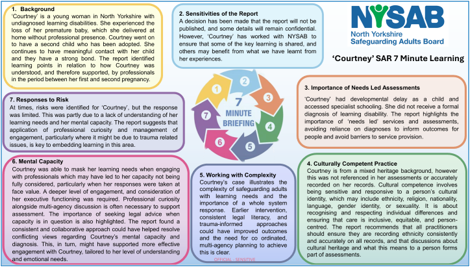
A Spotlight Session on learning from the Courtney SAR is planned for National Safeguarding Week, commencing 16 November 2026, and will explore the key findings, themes, advice and signposting for practitioners.
New Probation Hubs Launch in North Yorkshire
A new Young Adult Probation Pilot across Yorkshire and Humber is providing tailored support for young adults aged 18 to 25 under probation supervision, recognising that this can be a key transition point where the right support can help prevent future harm.
Three Young Adult Probation Hubs have been established in Harrogate, Scarborough and Northallerton, offering welcoming, psychologically informed spaces where young adults can meet probation practitioners and access support in a setting designed around their needs.
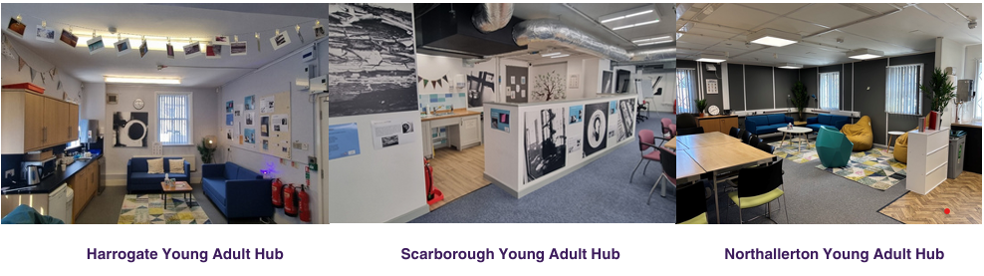
The hubs focus on building positive relationships, developing strengths and helping young adults identify opportunities for the future, particularly where people may have experienced trauma, poor mental health, neurodiversity or other challenges that can make engagement with services more difficult.
Early feedback is positive, with staff reporting improved attendance, stronger engagement and more meaningful conversations. Creative sessions, cooking and peer support are helping to build confidence and make support feel less formal. The project also highlights the value of partnership working, bringing together probation practitioners, peer mentors, employment and training providers, and community organisations so young adults can access joined-up support in one place. This joined-up approach helps address some of the factors that can contribute to vulnerability, exclusion and offending behaviour.
The initiative aligns closely with the North Yorkshire Safeguarding Adults Board’s focus on prevention and early intervention. By supporting young adults during a key transition into adulthood, improving engagement with services and helping individuals build stronger support networks, the hubs aim to reduce the likelihood of future harm, improve life chances and contribute to safer communities.
As the pilot develops, partners will continue gathering feedback and strengthening local opportunities for education, employment and training. If your team or organisation would like to get involved, through delivering sessions, offering support, sharing opportunities or finding out more, please contact NYYoungAdultHubs@justice.gov.uk
Joint Safeguarding Week 2026: Learning, partnership and community conversations
Safeguarding Week 2026 brought together partners from across North Yorkshire, York, Hull and East Riding to deliver a varied programme of learning under the theme Safeguarding is everybody’s business. Across the week, 54 sessions were offered to professionals and members of the public, covering topics including hoarding, trauma-informed practice, domestic abuse, modern slavery, rough sleeping, mental capacity, professional curiosity and emollient-related fire risk.
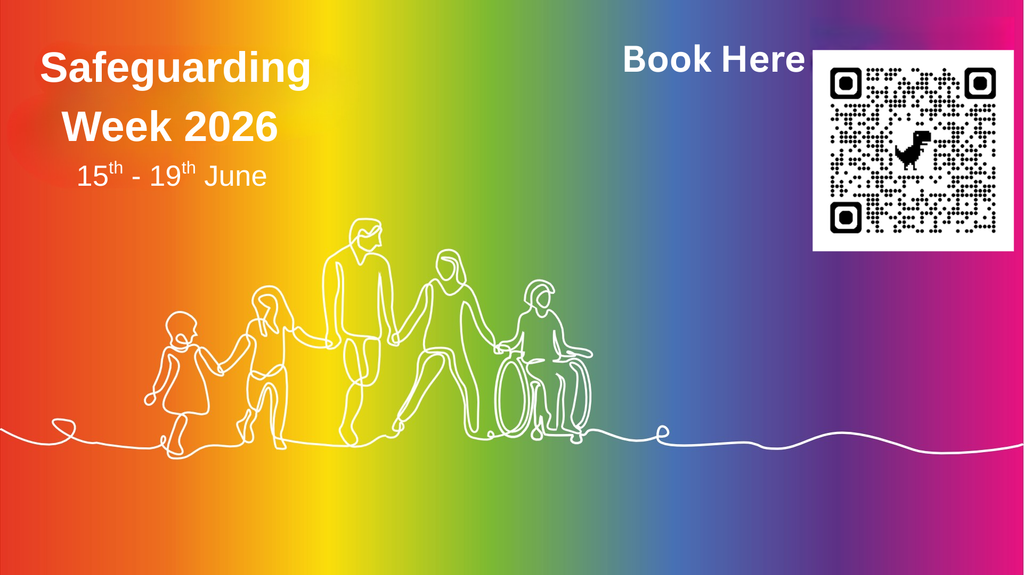
NYSAB delivered six sessions as part of the programme, with 256 bookings in total. Feedback showed that attendees valued the practical focus of the sessions, the use of real-life examples and the opportunity to reflect on how learning could be applied in their own roles. Many people said the sessions had increased their confidence, awareness and understanding of safeguarding issues.
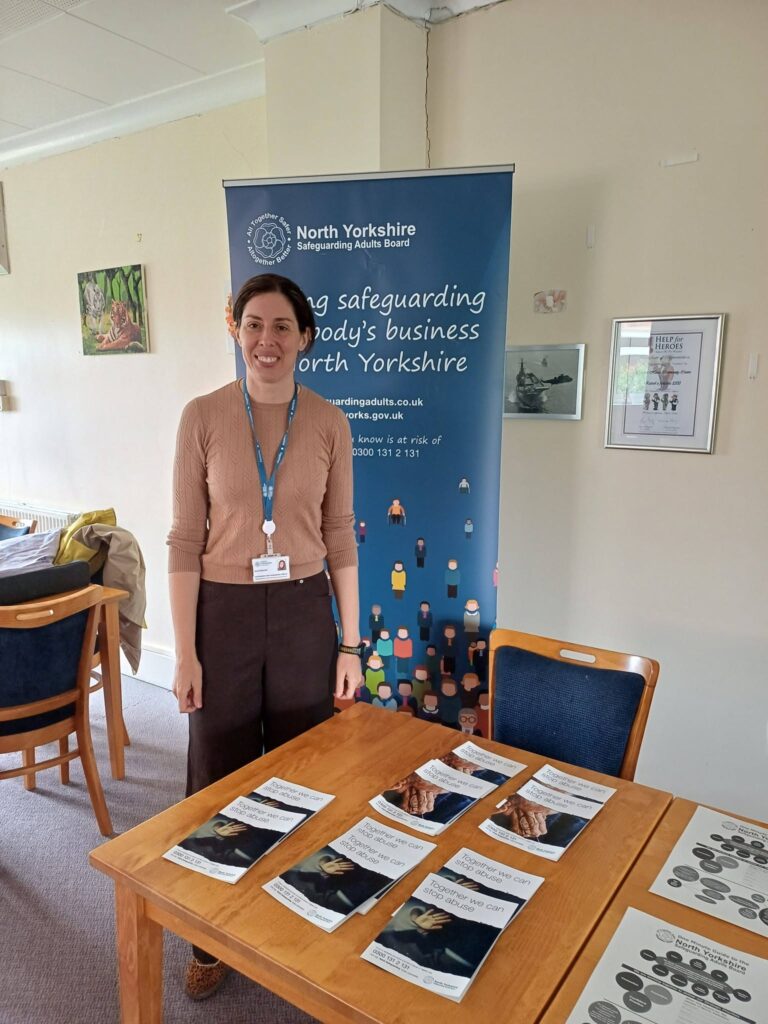
Alongside the online programme, NYSAB also supported community engagement activity in Tadcaster and Northallerton. These conversations helped raise awareness of how to recognise safeguarding concerns, where to seek support, and how partners can work together to reach communities in more accessible ways.
Thank you to all partners who supported Safeguarding Week 2026 and helped make the programme possible. Learning from this year’s activity and feedback will help shape future awareness raising, including NYSAB’s involvement in Safeguarding Adults Week in November 2026, which will focus on the national theme Every Voice. Every Choice.
Home Fire Safety Visit Referrals Making a Difference
Thank you to all partners who continue to refer vulnerable residents for Home Fire Safety Visits. Referrals remain one of the most effective ways of helping North Yorkshire Fire and Rescue Service reach people who may be at greater risk from fire in their homes. In quarter one we made over 500 Home Fire Safety Visits following referrals from partners.

The information provided through referrals enables our teams to offer tailored fire safety advice, install smoke alarms where needed and make onward referrals where they identify a need for wider support e.g. to Living Well, Social Care or Warm and Well. Every referral you make helps us protect some of the most vulnerable people in our communities.
Improvements to the Referral Form
The Online Home Fire Safety Check (NY Fire Service referral tool) has recently been updated to make it easier for professionals to complete and to help ensure we receive the information needed to assess risk and provide the most appropriate support. The revised form asks fewer questions about the property type, better captures risks to staff, and there is now a check box for if a joint visit is required.
Professional Information Session
We are pleased to invite professionals from across North Yorkshire and York to a free information session at York Fire Station on Wednesday 7th October, 10:00am to 11:30am.
The session will provide an overview of the prevention services and support available through North Yorkshire Fire and Rescue Service, including Home Fire Safety Visits, referral pathways and partner engagement opportunities. There will be refreshments and the opportunity to ask questions to some of the prevention team!
This is an excellent opportunity for housing, health, social care, voluntary sector and community professionals to learn more about our prevention offer and how we can work together to help keep people safe. To help with planning please complete this form.
If you would like to organise some home fire safety awareness training for your team or are hosting an event that you would like us to attend please contact laura.hodgson@northyorksfire.gov.uk
Safer North Yorkshire Community Festivals
Safer North Yorkshire Community Festivals
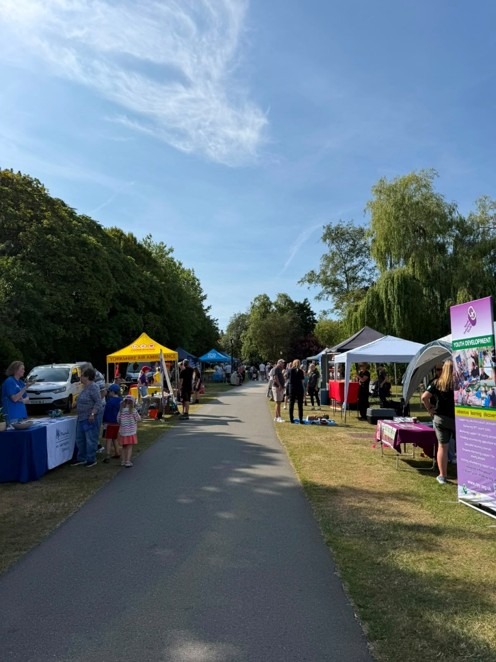
Safer North Yorkshire ran two new Community Festivals in Harrogate and Selby this August, bringing together more than 20 partner organisations at each event to offer advice, information and activities for local residents. The Harrogate event welcomed around 1,000 visitors followed by the Selby event attracting around 300 visitors.
Although led through the community safety partnership, the festivals also supported safeguarding adults by raising awareness of risk, prevention and where to get help, making it easier for people to ask questions or raise concerns in familiar community spaces.
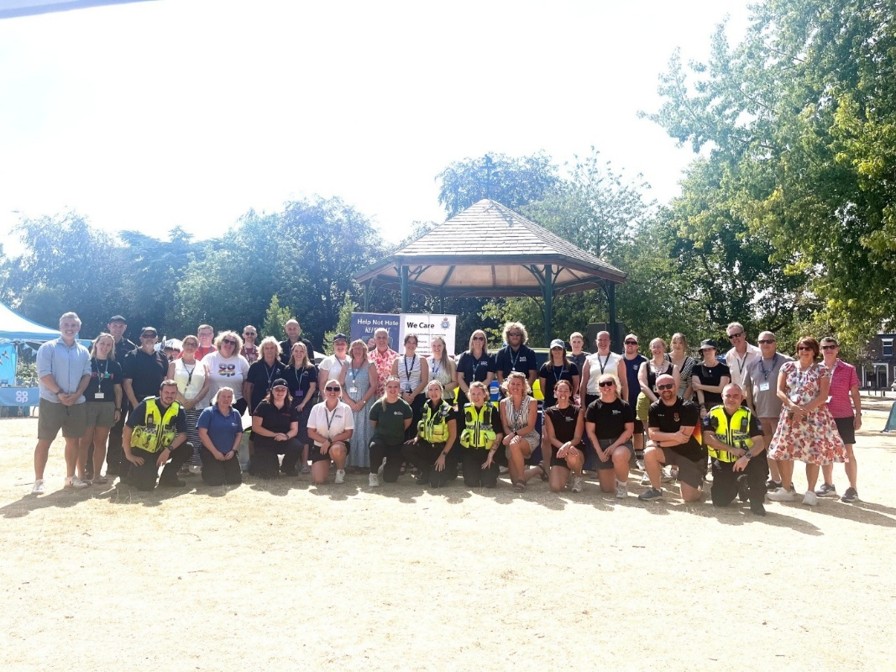
Visitors could access community safety, health and wellbeing information, speak to local services and take part in sporting and interactive activities for all ages. The events highlighted the strength of collaboration across North Yorkshire, demonstrating how agencies can work together to support safer, healthier and more resilient communities.
The Selby event was also attended by Councillor Jack Proud, MP Keir Mather, and York and North Yorkshire Mayor David Skaith. Overall, the festivals showed the value of partnership working in supporting safer, healthier and more connected communities.
Deprivation of Liberty: Legal changes and what they mean in practice
A recent Supreme Court judgment has changed how deprivation of liberty is understood in health and social care. Following the June 2026 AGNI Supreme Court judgment, courts and practitioners no longer use the rigid Cheshire West “acid test.”

Previous practice looked at whether someone was under continuous supervision and control and not free to leave. The Supreme Court has now moved away from that test, meaning practitioners need to consider the whole picture. This includes a broader evaluation of individual circumstances, wishes, feelings, objection, and consent versus compliance.
The Mental Capacity Act remains central to good practice. Capacity assessments, best interests decisions, clear care planning and good recording are still essential. Care arrangements do not automatically need to change, but professionals should be able to explain why any restrictions are needed and how the person’s rights, wishes and feelings have been considered.
There is also greater emphasis on noticing objection or distress, including through behaviour rather than words. People should not be assumed to agree because they appear quiet or compliant, and families, carers and advocates may help professionals understand the person’s communication, routines and choices.
The Social Care Institute for Excellence (SCIE) has advised that resources are currently being reviewed and updated. In the meantime, partners should use their professional judgment to determine if an individual is being deprived of their liberty under the new ruling. Where necessary, they should seek legal advice, make appropriate referrals, and clearly document their reasoning. SCIE has produced a webinar on what the Supreme Court’s judgment means for social care, including interim guidance and practical implications: SCIE Webinar
Follow us on Social Media
Keep up to date with the latest news, updates and resources from the North Yorkshire Safeguarding Adults Board by following us on social media!
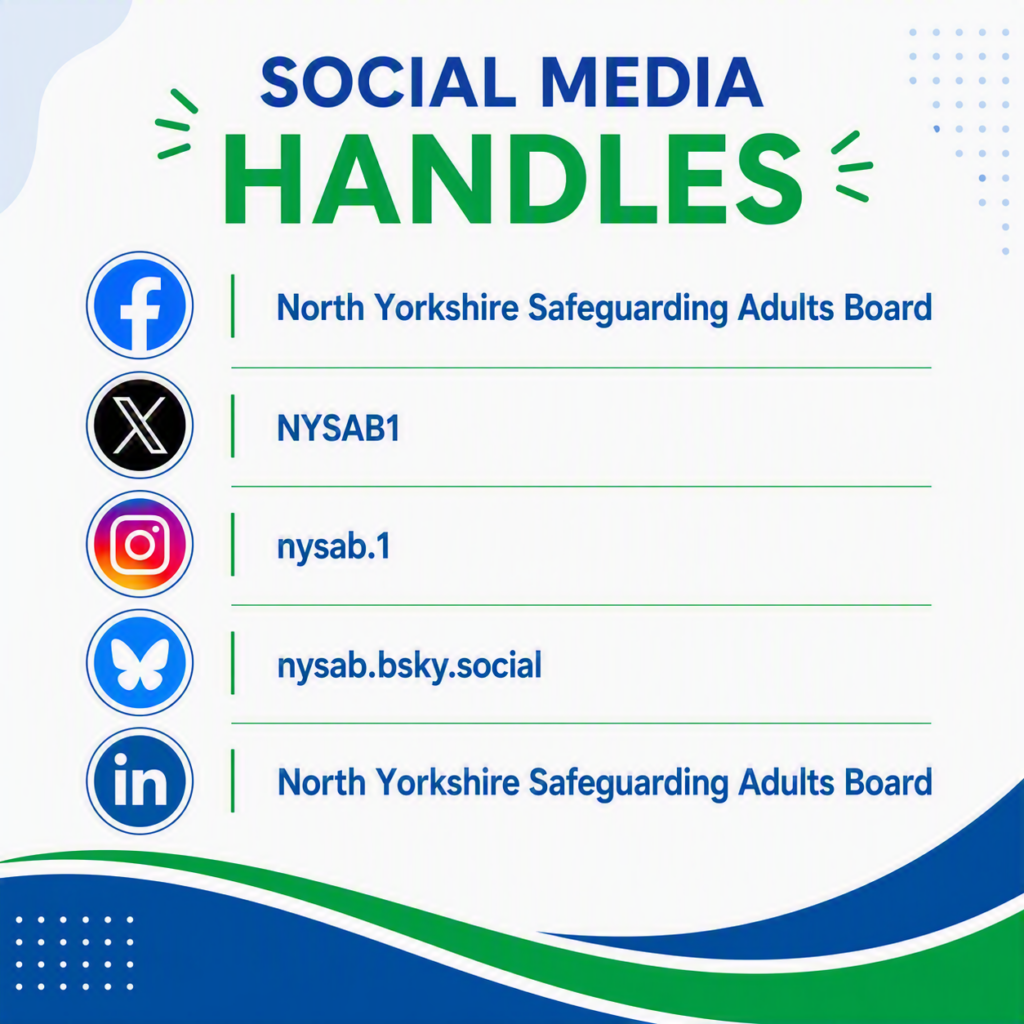
We share useful information about safeguarding adults, awareness campaigns, training opportunities and ways to get involved. Our social media handles are below and shown in the image, so please follow us and help share our messages with your networks.
- Facebook: North Yorkshire Safeguarding Adults Board
- X: NYSAB1
- Instagram: nysab.1
- BlueSky: nysab.bsky.social
- LinkedIn: North Yorkshire Safeguarding Adults Board
CONTACT US
We’re always looking for passionate individuals and organisations to get involved with the Safeguarding Adults Board.
If you’re interested in contributing to the work of any of our subgroups, please reach out to us at nysab@northyorks.gov.uk


 View all our news